

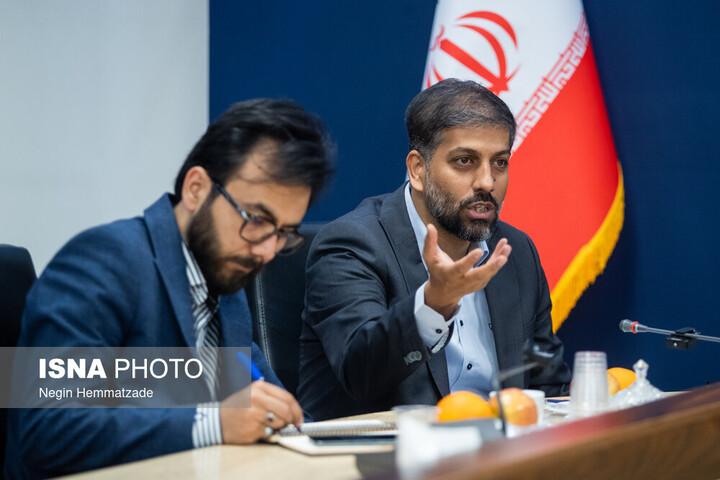
Amin Esfandiary, Head of the Corporate Venture Capital (CVC) Funds Commission of the Iran National Innovation Fund and CEO of Hamrahe Aval CVC, highlighted the crucial role of CVCs in Iran’s economic resilience amidst recent national and international challenges. He emphasized that in times of crisis and sanctions, CVCs, due to their direct links with parent holding companies and industries, can play a more active role in solving technological issues and ensuring the continuity of industrial operations.
Despite the expansion of the innovation ecosystem and the increase in the number of investment funds in recent years, cultural challenges remain a significant obstacle to the development of venture capital in the country. Many in the field believe that a cautious approach towards partnership and equity transfer hinders broader collaborations between technology companies and investors. Esfandiary identifies the weakness in the culture of participation and investment receptiveness as a primary reason for the slow growth of investment in Iran’s technology ecosystem.
He further noted that while the innovation law is robust, the associated bylaws and executive directives need to be rewritten to align with the country’s current conditions, including sanctions, currency fluctuations, and regional instability. Esfandiary stressed that the current bylaws are drafted with an R&D mindset, overlooking the distinct nature of investment partnerships, which require different criteria such as managerial maturity, sales and marketing capabilities, and brand representation.
Esfandiary pointed out that the “leap in technology production” law has been beneficial, leading to the establishment of over 70 CVCs and offering attractive tax incentives. However, the utilization of tax credits has been significantly lower than its potential, with annual usage below one trillion Tomans over the past three years, despite the substantial liquidity and investment capacity of the 20 major holding companies with CVCs.
He proposed that a portion of the tax credit should be fixed (e.g., 40-50%), with the remainder determined after specialized evaluation. This approach would provide greater certainty for holdings, encouraging more confident investment and potentially increasing the utilization of tax credits from the current level to several trillion Tomans annually.
Further elaborating on the challenges, Esfandiary warned against the risks of subjective evaluations due to the complete fluidity in assessment criteria. He argued that the limited and interconnected nature of the tech ecosystem increases the likelihood of biased judgments, complicating investment processes.
Highlighting global best practices, Esfandiary underscored the success of CVCs affiliated with large holding companies, emphasizing their strategic alignment with the parent company’s value chain. He contrasted this with government-backed funds, which often have a more supportive but less market-aligned approach, and individually-funded entities, which, while cautious, may lack the scale of corporate backing. The success of tech giants like Google and Meta in scaling startups through corporate investment further validates this model.
Esfandiary concluded by advocating for policies that encourage an increase in the number and volume of CVC investments, rather than restrictive measures. He stressed that supporting CVCs, which operate with private sector capital and contribute to the knowledge-based economy without direct government financial burden, is crucial for fostering technological advancement.
Click here to read the full news text.


No comment