


Over the past several years, Iran’s technology and innovation ecosystem has faced a convergence of unprecedented and interconnected challenges. Each of these challenges alone could have significantly affected the trajectory of technology-driven businesses. Together, however, they have created a highly complex operating environment for startups, knowledge-based enterprises, and innovative firms.
Persistent inflation, the consequences of war and geopolitical tensions, economic volatility, sanctions, internet disruptions, declining consumer purchasing power, the migration of skilled professionals, and growing uncertainty about the future have become part of the daily reality confronting entrepreneurs and technology executives.
In such an environment, the very definition of business success is being redefined. During more stable periods, rapid growth, market expansion, fundraising, increasing market share, and scalability were the primary indicators of success for technology companies. Today, however, survival itself has become the foremost priority. Operational continuity, team retention, cash-flow management, protection of intellectual assets, and the ability to sustain business activities have emerged as the new measures of managerial maturity.
A New Reality for the Innovation Ecosystem
The current situation may represent a unique experience rarely encountered by innovation ecosystems elsewhere in the world. Technology ventures are inherently accustomed to uncertainty, but today’s uncertainty extends far beyond markets and technological developments. It now permeates broader economic, political, social, and infrastructural dimensions.
Under such circumstances, management is no longer solely about planning for growth. It has become the art of making decisions under ambiguity, allocating scarce resources intelligently, and maintaining organizational cohesion in unstable conditions.
One of the most significant consequences of this period is that it reveals the true quality of leadership within technology firms. Crises tend to remove the masks that often conceal organizational weaknesses. During stable periods, structural deficiencies can remain hidden. In difficult times, however, what ultimately determines survival is the quality of decision-making, financial discipline, organizational culture, business model flexibility, and the ability to rapidly reconfigure resources.
Viewed from this perspective, the current environment serves as a rigorous test of organizational maturity. Companies that have successfully restructured costs, diversified supply chains, identified new markets, reduced risky dependencies, maintained effective communication with employees, and continued innovating despite limitations are building a form of sustainable competitive advantage. This advantage derives not merely from technological superiority but from the organization’s capacity to survive, adapt, and move forward under adverse conditions.
From Growth Ambitions to the Imperative of Survival
In management literature, organizational resilience is a key concept for describing this capability. Resilience is not simply the ability to withstand pressure or passively endure crises. Rather, it is the capacity to absorb shocks, redesign strategic pathways, and learn from disruption.
A resilient company does more than survive. It emerges from crisis with a deeper understanding of its customers, markets, resources, vulnerabilities, and capabilities. Within Iran’s knowledge-based economy, this concept has never been more relevant.
Yet resilience cannot be achieved without disciplined resource management. During periods of instability, cash flow becomes the lifeblood of a business. Decisions that may appear tactical during normal times often become existential during crises. Cost management, contract restructuring, project prioritization, customer retention, revenue model adaptation, and workforce decisions can all have long-term consequences for an organization’s future.
Human Capital: The Frontline of Business Sustainability
Another critical factor in the sustainability of technology companies is human capital. The primary assets of these organizations are rarely physical infrastructure; rather, they consist of the knowledge, expertise, and creativity of their teams.
Consequently, retaining talent during periods of crisis is not merely a matter of corporate responsibility or human resource management. It is an economic and competitive necessity. Organizations capable of maintaining transparent communication, preserving trust, and fostering a sense of collective ownership in overcoming challenges are significantly more likely to endure and eventually return to a growth trajectory.
The Importance of Documenting Experience
Equally important is the need to document and analyze the experiences emerging from this period. What technology companies in Iran are currently experiencing can be viewed as a real-time laboratory for crisis management.
Entrepreneurs and executives are testing solutions that are rarely found in conventional management textbooks. They are navigating circumstances shaped by war-related pressures, internet disruptions, constrained markets, fragile infrastructure, and pervasive uncertainty. If these experiences are not systematically documented and shared, a valuable body of managerial knowledge may be lost.
The documentation of crisis experiences can contribute to the development of an indigenous body of knowledge in technology business management—one that is rooted not in translated international theories alone, but in the practical experiences of Iranian firms operating under unique economic and ecosystem conditions.
Such knowledge could prove invaluable for future generations of entrepreneurs, managers, and investors by revealing which decisions were effective, which mistakes were repeatedly made, and which strategies contributed most significantly to resilience.
From Crisis Experience to Indigenous Knowledge Creation
Investors, too, are facing a new set of evaluation criteria. Under normal market conditions, revenue growth, market size, and user acquisition rates often dominate investment decisions. In today’s high-risk environment, however, factors such as leadership quality, cost discipline, business model adaptability, customer loyalty, team retention, and scenario planning have become increasingly important.
As a result, the current crisis may help refine investment perspectives, directing capital toward companies that possess not only growth potential but also the ability to survive and adapt.
At the same time, responsibility for business sustainability cannot rest solely on company managers. The knowledge-based economy functions as an interconnected ecosystem that requires coordinated action from policymakers, investors, financial institutions, technology leaders, and supporting organizations.
Regulatory flexibility, improved access to financing, stronger digital infrastructure, support for technology exports, creation of markets for knowledge-based products, and enhanced insurance and guarantee mechanisms are among the measures that can strengthen the resilience of the ecosystem as a whole.
Tomorrow’s Capital Lies Within Today’s Challenges
Although these are difficult and costly times, they may ultimately represent a defining moment in the maturation of the innovation ecosystem.
Periods of uncertainty reveal which businesses possess genuine resilience and which leaders are capable of making decisions under ambiguity, preserving human capital, managing scarce resources, and transforming crisis into an opportunity for learning and adaptation. In many respects, today’s challenges are serving as a real-world assessment of organizational capability.
For venture capital and innovation financing institutions, this environment also presents a unique opportunity to identify companies with exceptional resilience and long-term potential.
The road ahead for technology businesses will not be easy. Yet the experiences gained today may become one of the most valuable assets of tomorrow’s knowledge-based economy. If the decisions, strategies, mistakes, and achievements of this period are properly documented and analyzed, they can form the foundation of a new body of knowledge on crisis management, business sustainability, and organizational resilience in Iran.
Such knowledge will not only benefit today’s technology companies but will also provide guidance for future generations of entrepreneurs and business leaders navigating an increasingly uncertain world.
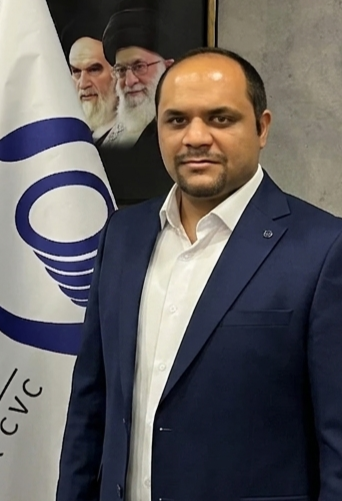
Ali Rasouli
Ecosystem Development Manager, Soroush Sepehr New Technologies Company


No comment