


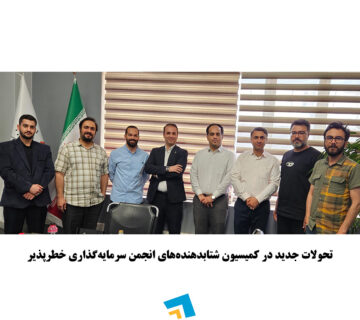
Kaveh Goudarzi, a board member of the Accelerators Commission at the Venture Capital Association and CEO of Jahat Accelerator, emphasized in an interview, originally published by Iranian Startup, that the internet is not merely a communication tool but the fundamental infrastructure for wealth creation and retaining elite talent in the country. He warned that infrastructure limitations, coupled with geopolitical tensions, are significantly hindering the growth of innovation and the retention of skilled professionals.
Internet: Beyond a Communication Tool
Goudarzi elaborated on the current state of the innovation and digital economy ecosystem, noting that it faces pressures from both uncertain investment climates and regional tensions, as well as internet restrictions that have critically slowed the growth of innovative businesses.
He stated that private sector actors are compelled to operate with increased flexibility and resilience to sustain hope among specialized professionals and elite individuals.
The Gap Between Industry and Innovation
While acknowledging supportive upstream regulations like the “Knowledge-Based Production Leap Law,” Goudarzi identified the core challenge lying in the significant disconnect between traditional industries and the innovation ecosystem.
This gap, he explained, leads to a fragmented approach among innovative entities, preventing the effective integration of groundbreaking team capabilities into the industrial sector and depriving industries of the potential benefits of innovation and productivity gains.
Accelerators: Bridging Capital and Innovation
The CEO of Jahat Accelerator proposed leveraging accelerators as a practical solution to bridge this divide. He highlighted that Jahat and the Accelerators Commission of the VC Association are actively working to connect traditional capital with innovative teams.
Goudarzi also pointed out that accelerators and innovation centers affiliated with the Pardis Technology Park’s Acceleration Center can serve as a common language between conventional investors and startup teams. He believes that establishing appropriate structures can mitigate investment risks for industries and channel their resources toward applied Research & Development (R&D) in universities and tech teams through legal instruments such as tax credits.
Internet: The Backbone of Wealth Creation and Talent Retention
In another segment of the interview, Goudarzi stressed the internet’s vital role in the digital economy, urging policymakers to adopt an infrastructure-centric perspective.
“In the current situation,” he stated, “the internet is not just a communication tool; it is the primary infrastructure for wealth creation and retaining elite talent in the country.” He added that facilitating economic activities should involve a development-oriented approach to lifting internet restrictions, aligning with the needs of the innovation economy.
The Challenge of Discoordinated Decision-Making Bodies
Goudarzi cited the lack of integration among decision-making institutions as a serious issue within the startup ecosystem, specifically mentioning the inconsistent recognition of evaluations across different government bodies.
He provided an example where, despite a specialized entity like Pardis Technology Park issuing a “Level One Competency Certificate” after thorough assessments, this accreditation is sometimes disregarded by experts from other organizations, such as the Vice Presidency for Science, Technology, and Knowledge-Based Economy. This inconsistency, he noted, erodes trust and slows down processes.
Goudarzi called for a unified accreditation portal and the elimination of subjective judgments at the expert level.
Reducing State Intervention and Fostering Private Sector Trust
In conclusion, Goudarzi emphasized that the government should reduce its direct interventionist role and place greater trust in the assessments and specialized structures of the private sector and professional organizations. He asserted that the effective implementation of supportive regulations hinges on the government stepping back from direct involvement, thereby enabling greater agility within the private sector.
Source: Iranian Startup


No comment