

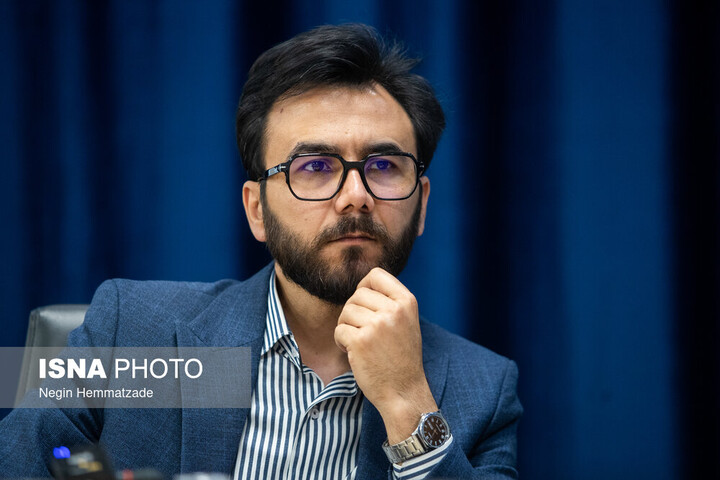
The secretary of Iran’s Venture Capital Association has outlined the structure of the association and the current state of investment in Iran’s innovation ecosystem, saying that more than 16 trillion tomans in venture capital investment were carried out across 220 contracts in 1403. However, events such as internet outages and social unrest reduced sales for technology companies, while the absence of industry representatives in government decision-making processes has further intensified the sector’s challenges.
Venture capital is considered one of the most important financing tools in innovation-driven economies, playing a key role in the growth of startups, the commercialization of technology, and the development of knowledge-based companies. In this model, financial resources are directed toward innovative businesses with high risk but significant growth potential. Alongside capital, these businesses also receive support such as networking, management consultation, and access to markets.
In Iran, various entities have become active in this field in recent years, including research and technology funds, listed venture capital funds, accelerators, and venture capital firms. The Venture Capital Association of Iran serves as the industry’s representative body, working to strengthen collaboration among players and pursue the sector’s demands in policy and regulatory processes.
Speaking at an ISNA roundtable, Sajjad Zavar, secretary of the association, said the organization was established in 2013 with the aim of following up on industry matters before regulatory bodies, building networks, expanding investment activities, and helping managers and employees in the investment ecosystem grow professionally.
He said the association is divided into seven categories: corporate venture capital research and technology funds (CVCs), research and technology funds, VC investment companies, accelerators, crowdfunding platforms, credit enhancers, and listed venture capital funds. Although these groups operate under different business models, they overlap significantly and work closely together.
Zavar said the association has more than 160 member companies from across Iran’s provinces, each of which falls into one of these seven categories and plays a specific role in developing the innovation and investment ecosystem.
He added that these organizations collectively meet much of the service-related needs of knowledge-based, creative, and technology-oriented companies, with each member contributing to a different part of the investment development chain.
Reviewing last year’s performance, Zavar said the association publishes an annual report on the innovation and investment ecosystem. In 1403, more than 16 trillion tomans in direct venture capital investment was completed through 220 contracts, and the report for 1404 is currently being compiled.
Commenting on last year’s investment climate, he said the 12-day war, protest-related events, and internet disruptions caused company sales to decline. Venture capital funds had already begun investment processes, but growth remained limited. At the time, industry actors were uncertain about what direction conditions would take, and when developments escalated, activities nearly came to a halt.
Decision-making without ecosystem representation worsens the damage
Zavar pointed to a major policy gap in Iran’s innovation sector, saying one of the most serious problems is that government decision-makers do not consult the industry before drafting support packages or issuing regulations.
He said that before the 12-day war — and especially after it — the association formally wrote letters and held in-person meetings requesting that representatives of the investment ecosystem be consulted before any decisions affecting the sector were made. Even if decision-making itself could not be changed, he said, at least one industry representative should be present in these meetings to convey field realities and concerns.
Zavar noted that while stakeholders are often invited to smaller meetings, this does not happen in major discussions related to the innovation ecosystem. He said concerns raised today have been repeatedly discussed in industry meetings over the past three years, yet no industry representative is present when final decisions are made.
Referring to the support package announced after the 12-day war, Zavar said that following internet outages and widespread disruptions, a 200 million toman support package was eventually allocated to research and technology funds — an amount he said is not proportionate to the damage suffered by businesses. In the best-case scenario, he said, this amount would only cover about one month of salaries for five to ten employees. He also warned that no short-term financial support has yet been provided to cover defaulted guarantee obligations, and if this continues, the risk of severe weakening of funds and disruption in financing innovative businesses will grow significantly.
Zavar stressed that the damages were far greater than those figures suggest. Some losses are not limited to direct costs, he said, but also include lost markets, declining customer trust, and a complete halt in sales — harms that are not easily compensated.
He added that in some cases, support has been directed mainly toward companies with visible and immediate damage, while companies that lost their markets or never had domestic sales have been less visible in compensation calculations, despite suffering substantial and sometimes open-ended losses.
Zavar said the association is currently consolidating data and estimating total damages, as many companies continue to struggle with the consequences of internet outages and communication disruptions. If the sector were only dealing with rising import costs, export barriers, or inflation, he said, businesses could at least continue operating despite the hardship. But when the internet is cut off and communication between buyers and sellers is completely interrupted, the sales cycle stops and business activity is effectively paralyzed.


No comment