

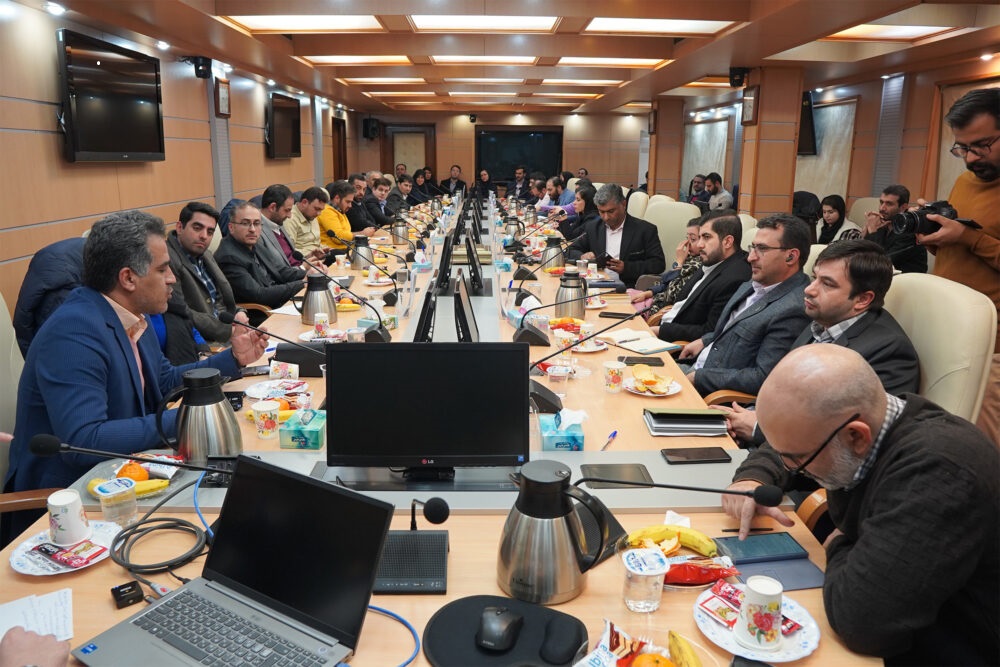
The Venture Capital (VC) Commission, a subcommittee of the National Association of Venture Capital Companies, commenced its activities in late 2022 with the objective of pursuing the professional and sectoral demands of its VC members. The formation of this commission was the outcome of a series of collaborative meetings held with stakeholders in the field, which were initially organized in cooperation with the Innovation and Prosperity Fund.
The primary goal of these meetings was to identify common challenges, categorize demands, and design mechanisms for their systematic follow-up. Following these discussions, the composition of the commission members was finalized:
- Reza Bagheri
- Mohsen Sadri
- Sina Jirofti
- Mohammad Piri
- Ahmadreza Sadeghi
- Saber Sayyadi
Key Issues and Demands Raised:
In recent months, the VC Commission has focused on key concerns and shared priorities among venture capital firms. The most prominent issues discussed and followed up in the meetings include:
- Advocacy for the long-pending LPF (Limited Partnership Fund) regulation
- Enabling VC firms to benefit from the tax exemptions outlined in Article “T” of the “Production Leap Law”
- Clarification of the authority responsible for licensing VCs and angel investors
- Developing collaboration models between VCs and CVCs (Corporate Venture Capital)
- Assessing co-investment opportunities with the Innovation and Prosperity Fund
- Initiating efforts for the establishment of a Seed Research and Technology Fund
Topics Discussed in Recent Sessions:
In its last two sessions, the Commission addressed a wide range of operational and structural concerns, including:
- Lack of clear exit models for investors from startups
- Growing disconnect between VCs and policymakers
- Absence of an integrated information system for association members to interact
- Lack of effective infrastructure to connect technologists with investors and vice versa
- No centralized database of VC professionals
- Overconcentration of resources on the end of the innovation chain (startups), with limited support for intermediary institutions
- Complexities in accessing tax exemptions under the Production Leap Law
- Lack of recognition for the critical roles of angels and general partners (GPs) in the ecosystem
- Scarcity of specialized events for networking and introducing VCs to new LPs
- Difficulties in financial resource mobilization, particularly foreign currency funding
- Operational challenges in implementing Article 18 of the Production Leap Law and collaborating with banks
- Debates around the 2% management fee and comparisons between VC managers and portfolio managers in capital markets
- The need to establish standards and position the Association as a specialized authority in the VC sector
- Lack of mechanisms for sharing both successful and failed experiences within the ecosystem
- The necessity to define clear mechanisms for engaging and advocating with government bodies
- Proposal to launch a specialized electronic journal for information dissemination
- Redefining roles and concepts between LPs and GPs within the ecosystem’s structure
- Designing specialized investment portfolios and structured exit pathways through institutional mechanisms
Agenda for the Upcoming Meeting:
The next session of the Commission will focus on four main areas:
- A report by Dr. Neyeri on the activities of the Association’s Board of Directors
- Presentation of Pasargad CVC’s experience and an analysis of the Production Leap Law by Dr. Olamiyeh
- Networking and open dialogue among attendees
- Review of the previous session’s report and discussion of practical solutions
As a specialized arm of the National Association of Venture Capital Companies, the VC Commission has aimed to foster a structured dialogue, advocate for industry demands, and enable collaboration among key players. The Commission’s discussions and engagements reflect deep-rooted challenges that must be addressed in order to achieve sustainable growth in the country’s venture capital ecosystem.
From policy and legal gaps to the lack of informational and connective infrastructure, and the unclear definition of roles within the investment chain—all are issues the Commission has placed on its agenda with a practical and solution-driven approach.
More importantly, a shared understanding of the need for collective action has emerged. The consistent participation of commission members, support from the Association’s expert base, and dialogue with financial and policy institutions signal that the VC ecosystem in Iran is ready to transition from mere problem-identification to solution development, implementation, and institutionalized cooperation.
Drawing on accumulated experience, the VC Commission seeks to act as a bridge between the Association’s professional members, government entities, financial institutions, and other ecosystem stakeholders. In this regard, planned initiatives include publishing a specialized journal, building a professional talent database, designing transparent co-investment mechanisms, and documenting both successful and failed cases.
Ultimately, the Commission believes that real growth in venture capital investment in Iran is impossible without a specialized, coherent, and proactive institutional framework. The VC Commission invites all members and stakeholders to actively contribute to this path—because the success of this journey depends on shared commitment and collective effort.

No comment